Title of the Proposal:
Emerging Technologies Towards Intelligent and Sustainable Agriculture
Organizers:
- Chair: Prof. Si Chen, Hubei University, China, email: kathryncs123@hotmail.com
- Organizer: Prof. Hady Habib Fayek, Egyptian Chinese University, Egypt, email: hadyhabib@hotmail.com
- Organizer: Dr. Zhe Luo, Shenzhen Polytechnic University, China, email: luozhe@szpu.edu.cn
- Organizer: Prof. Yuemin Ding, University of Navarra, Spain, email: yueminding@tecnun.es
Description:
Modern agriculture faces mounting pressure from climate change, resource scarcity, labour shortages, etc. Addressing these challenges calls for interdisciplinary technical innovation that raises productivity while conserving resources and protecting ecological sustainability. Driven by multi-source sensing, edge AI, autonomous unmanned platforms, and next-generation wireless IoT, intelligent agriculture is moving beyond isolated sensing devices toward integrated, deployable field-level systems that close the gap between laboratory algorithms and real-world farm operations. This special session brings together researchers whose work spans precision irrigation and crop physiological regulation, UAV and robotic autonomous farming, embedded multi-modal perception, and agricultural IoT wireless networks. It aims to report cutting-edge theories, algorithmic advances, hardware prototypes, and field validation studies for sustainable agriculture. We welcome original research papers, application-oriented studies, and review articles, with the goal of building a cross-disciplinary exchange platform that connects agronomy, electronic engineering, automation, and information and communication technology.
Topics of this special session include (but not limited to):
- AI‑driven crop phenotyping, crop stress diagnosis, pest‑disease early warning
- Precision irrigation, water‑fertilizer optimal management and resource‑saving sustainable cropping systems
- UAV and agricultural autonomous robots, swarm control for field operation
- Multi‑modal sensors, embedded perception terminals, edge‑AI hardware for farm‑site deployment
- Agricultural IoT, B5G/6G wireless sensing networks, farm environmental & livestock monitoring
- Digital‑twin farm, data‑driven decision‑support systems for climate‑resilient agriculture
- Remote‑sensing and sky‑ground integrated observation for large‑scale agricultural monitoring
- Low‑carbon agriculture, soil health improvement, ecological planting technology
- Explainable machine‑learning and optimization algorithms for practical agricultural scenarios
- Field test, validation and deployment experience of intelligent agricultural equipment
- etc.
Biography:
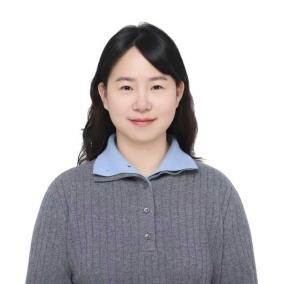
Prof. Si Chen holds a Ph.D. in Water Resources and Environmental Engineering from Hanyang University, Korea. She is an Associate Professor at the School of Resources and Environmental Science, Hubei University, China and was selected for the “Chutian Scholar” Talent Program of Hubei province. She previously held a position as a Visiting Professor at the University of Navarra, Spain. Her research focuses on climate change, water-related disaster monitoring & early warning, and agricultural water resources management. She conducts interdisciplinary applied research integrating geoscience, hydrology and mathematical statistics. She has published more than 30 academic papers in high-level journals and served as the Principal Investigators of research projects funded by the National Natural Science Foundation of China, the Ministry of Education Humanities and Social Sciences Fund, and the Hubei Provincial Natural Science Foundation.
Prof. Hady Habib Fayek (IES member) received his Ph.D. degree in 2019 at the age of 29 years old, in Electrical Power Engineering, from Helwan University, Egypt including associated research with Texas A&M University, USA. He got his B.Sc. degree in 2011, and M.Sc. degree in 2014 from Helwan University. He is now an associate professor in Electrical power and machines. He is currently working as head of energy and renewable energy engineering department in Egyptian Chinese University. He is a visting professor in the Energy Engineering Programs (UG and PG), Faculty of Engineering, Heliopolis University. He is the chairman of IEEE Industrial Electronics Egypt Chapter; he was the main organizer of many international conferences about smart cities and sustainable electrical engineering. He published more than 50 research papers about recent advances in the electrical power and energy sector in many international conferences and journals. Hady is a guest editor and reviewer in many IEEE, Tech-science, MDPI, Elsevier and IET transactions, journals and conferences. He is also a keynote speaker in many conferences and webinars.
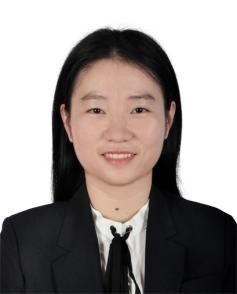
Dr. Zhe Luo received the Ph.D. in Electronic Systems Engineering from Hanyang University, Ansan, South Korea, in 2019. From 2020 to 2022, she was a Postdoctoral Researcher with the Tsinghua University. Since 2022, she has been a lecturer and a master’s graduate supervisor with the School of Artificial Intelligence, Shenzhen Polytechnic University. Her research interests include Energy Internet, multi-energy scheduling, and reinforcement learning. She was a recipient of the 8th IEEE Conference on Energy Internet and Energy System Integration Best Paper Award in 2024.
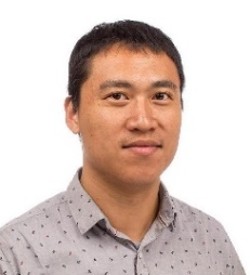
Prof. Yuemin DING (SM, IES Member) received his Ph.D. in Electronic Systems Engineering from Hanyang University, Ansan, South Korea, in 2014. Since 2021, he has been an Associate Professor at the Tecnun School of Engineering, University of Navarra. He previously held positions as a Postdoctoral Fellow at the Norwegian University of Science and Technology, a Visiting Fellow at Queensland University of Technology, Australia, and KTH Royal Institute of Technology, Sweden, as well as an Associate Professor at Tianjin University of Technology, China. He has been selected for both the Ramón y Cajal Fellowship, the ikerbasque Fellowship, and the Gipuzkoa Fellowship. Currently, he serves as an Associate Editor for the IEEE Transactions on Consumer Electronics, the IEEE Open Journal of the Industrial Electronics Society, and other journals. He is also recognized as one of the World’s Top 2% Scientists by Stanford University. His research interests include the Internet of Things, B5G/6G, smart grid communication, and their real-world applications.

